
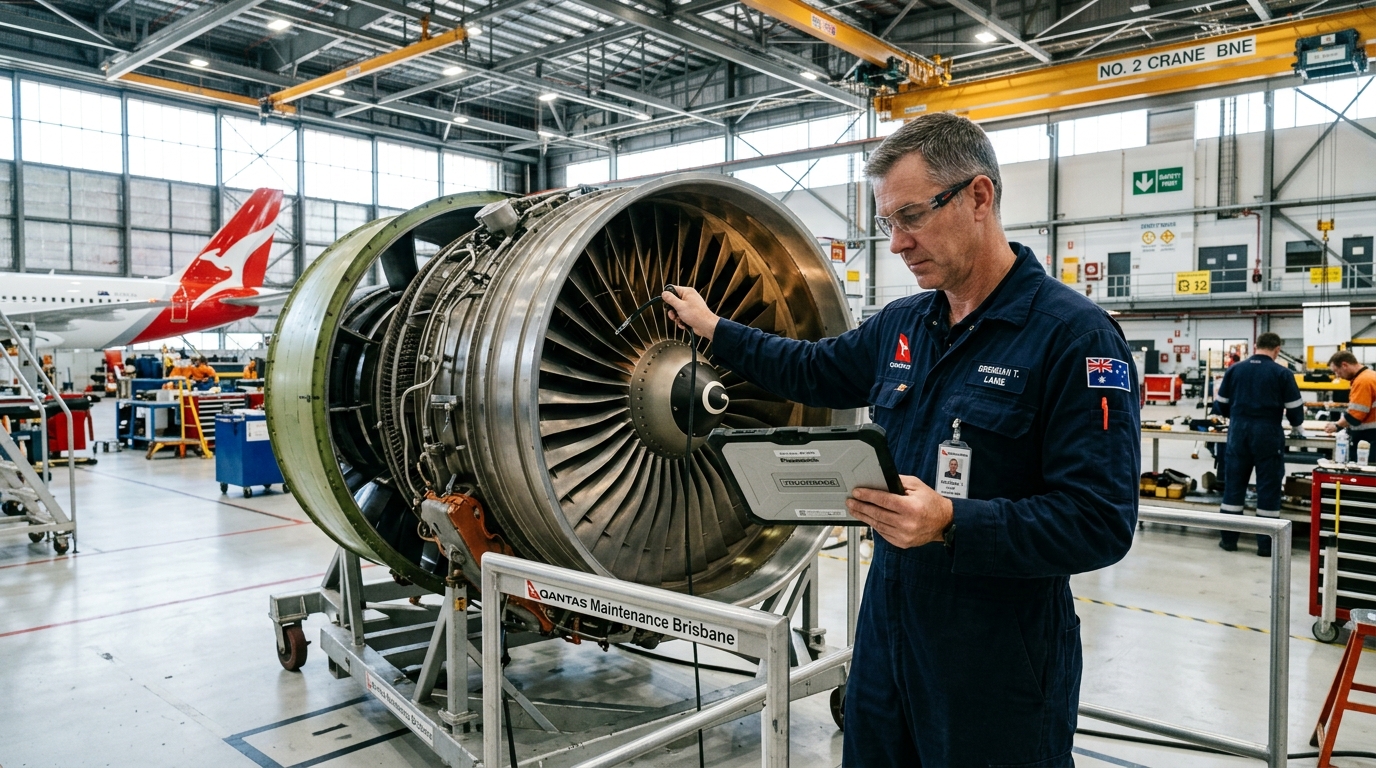
While pilots navigate aircraft across the skies, the safety and airworthiness of every commercial flight rests in the hands of the Licensed Aircraft Maintenance Engineer (LAME). Operating under strict global and domestic aviation safety regulations, LAMEs hold the legal authority to sign Certificates of Release to Service (CRS), certifying that an aircraft’s engines, flight control systems, radar suites, and airframes comply with manufacturer airworthiness directives. Facing an acute national shortage of certified aerospace tradespeople, Australia’s maintenance sector offers outstanding job security and high remuneration.
The Regulatory Structure: CASR Part 66 and Part 145
Aircraft maintenance engineering in Australia is regulated by CASA under Civil Aviation Safety Regulations (CASR) Part 66 (certifying personnel) and Part 145 (Approved Maintenance Organisations – AMOs). Unlicensed engineers (AMEs) perform physical wrenching and component replacement, but only a licensed LAME holding the appropriate Category endorsement may inspect, verify, and legally release an aircraft for flight.
Understanding CASR Part 66 Licence Categories
CASA recognizes distinct license categories tailored to specific technical disciplines:
- Category B1 (Mechanical / Airframes & Powerplants): The primary mechanical licence, divided into subcategories:
- B1.1 (Aeroplanes Turbine): Large commercial airliners, turboprops, and corporate business jets.
- B1.2 (Aeroplanes Piston): Light general aviation aircraft.
- B1.3 (Helicopters Turbine): Emergency medical service (EMS), offshore oil & gas, and defense helicopters.
- B1.4 (Helicopters Piston): Light training and agricultural helicopters.
- Category B2 (Avionics): Encompasses complex aircraft electrical generation, fly-by-wire flight control computers, automatic flight guidance (autoland), radar, satellite communication, and navigation systems.
- Category A (Line Maintenance Certifying Mechanic): Authorised to certify minor scheduled line maintenance checks and simple defect rectifications.
- Category C (Base Maintenance Certifying Engineer): Holds overall certification authority for an entire aircraft undergoing major heavy structural overhauls in a hangar.
Australian LAME Remuneration Landscape
Due to the critical shortage of licensed engineers across commercial airlines, regional operators, and defense contractors, compensation packages for Part 66 licence holders have escalated substantially:
| Role / Qualification Level | Practice Environment | Base Salary (AUD) | Total Annual Package (Inc. Shift Allowances & Super) |
|---|---|---|---|
| Apprentice Aircraft Engineer (4-Year Term) | Hangar Base Maintenance / Airline | $42,000 – $65,000 | $48,000 – $72,000 |
| Unlicensed Aircraft Maintenance Engineer (AME) | Regional MRO / GA Facility | $75,000 – $90,000 | $85,000 – $105,000 |
| LAME (Category B1.1 or B2 – Single Type Rating) | Domestic Airline Line Maintenance | $115,000 – $138,000 | $135,000 – $165,000 |
| Senior Dual-Category LAME (B1 & B2 / Multi-Rated) | Major Carrier (e.g. Qantas, Virgin, Jetstar) | $145,000 – $175,000 | $170,000 – $210,000 |
| FIFO Offshore / Mining Aviation LAME | WA Pilbara / Darwin Rotary Wing | $150,000 – $185,000 | $180,000 – $225,000 (equal-time roster) |
| Maintenance Manager / Chief Engineer | Part 145 Maintenance Facility | $160,000 – $210,000 | $185,000 – $240,000+ |
Line Maintenance vs. Base Maintenance (MRO)
Line Maintenance: Conducted outdoors at airport passenger gates during rapid transit turnarounds (often under strict 45-minute countdowns). Involves diagnosing real-time flight deck snag reports, reviewing minimum equipment lists (MELs), and releasing aircraft for departure. High shift penalties apply for rotating 24/7 night rosters.
Base Maintenance: Conducted inside massive hangars (such as Qantas MRO in Brisbane or Melbourne). Aircraft undergo scheduled ‘C’ and ‘D’ checks, stripped down to bare aluminum airframes for intensive non-destructive testing (NDT), engine overhauls, and avionics suite refits.
The Path to Licensure: Modular Exams & Schedule of Experience
Transitioning from an apprentice to a fully endorsed LAME involves completing an accredited vocational pathway:
- Vocational Apprenticeship: Completion of a four-year apprenticeship combining workshop employment with the Certificate IV in Aeroskills (Mechanical MEA40618 or Avionics MEA40718) or the Diploma of Aeroskills through TAFE or specialized aviation colleges.
- CASA Part 66 Modular Knowledge Examinations: Passing up to 17 rigorous modular theory examinations covering mathematics, physics, electrical fundamentals, digital techniques, materials & hardware, aerodynamics, human factors, and aviation legislation.
- Schedule of Experience (SOE): Accumulating and documenting four years of practical, logbooked maintenance experience on operational aircraft, verified and signed off by qualified certifying engineers.
- Type Rating Training: Attending an approved Part 147 type rating course (e.g., Boeing 737NG/MAX or Airbus A320 Family), including theoretical systems study and 10 to 14 days of practical hands-on simulation training.
FIFO Opportunities in Western Australia & the Northern Territory
One of the most financially rewarding avenues for Australian LAMEs is supporting Fly-In Fly-Out (FIFO) resource operations. Engineering contractors stationed at remote mining airfields (such as Newman, Paraburdoo, or Karratha) or offshore helicopter bases servicing gas platforms in the Timor Sea typically work equal-time rosters (e.g., 2 weeks on / 2 weeks off or 1 week on / 1 week off) with all flights, remote accommodation, and meals fully covered.
Human Factors and Maintenance Error Management Systems (MEMS)
Because aircraft maintenance operates under unforgiving zero-defect tolerances, human factors training is a mandatory component of CASR Part 66. Australian AMOs implement comprehensive Maintenance Error Management Systems (MEMS) grounded in James Reason’s Swiss Cheese model of accident causation. LAMEs are trained to identify circadian fatigue, situational peer pressure, and complacency, utilizing strict cross-checking protocols before signing off complex mechanical sub-assemblies.
Under the Transport Safety Investigation Act 2003, all critical maintenance anomalies or structural fatigue cracks must be promptly reported to the Australian Transport Safety Bureau (ATSB) and CASA via the Defect Reporting Service (DRS). This non-punitive reporting culture ensures systemic fleet-wide risks are mitigated across the entire Australian civil aviation fleet.
Frequently Asked Questions
What is the difference between an aeronautical engineer and a LAME?
An aeronautical engineer holds a university degree and designs aircraft structures, aerodynamic profiles, and modifications from an office. A LAME is a licensed tradesperson certified to conduct physical hands-on maintenance, troubleshoot defects, and sign off the legal release to service on active aircraft.
Can overseas aircraft engineers convert their licenses to CASA?
Yes. Aircraft engineers holding EASA Part 66, UK CAA, or FAA A&P licenses can apply for CASA Part 66 license recognition. Candidates must provide verified logbooks, pass CASA Part 66 Module 10 (Aviation Legislation), and obtain an Aviation Security Identification Card (ASIC).
What clearances are required to work at Australian airports?
All airport-based engineering staff must hold an active Aviation Security Identification Card (ASIC), which requires comprehensive national criminal history background checks, AusCheck national security vetting, and immigration checks.

