
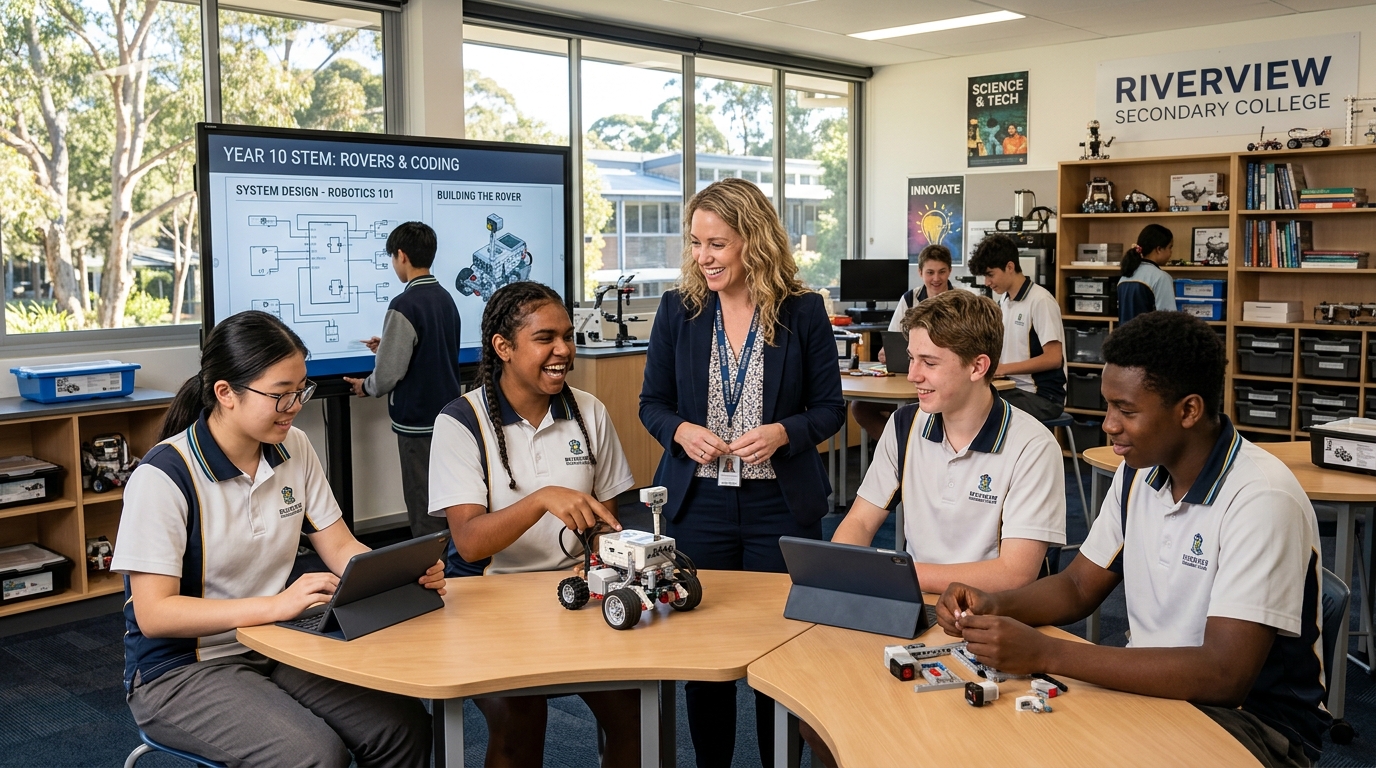
Primary and secondary education in Australia is currently experiencing unprecedented workforce challenges. Driven by population expansion, demographic retirements, and rising student enrollments across public, Catholic, and independent school sectors, state education departments are aggressively recruiting qualified teachers. For both domestic education graduates and internationally qualified educators, Australia offers transparent public sector pay scales, structured career progression, and substantial regional recruitment incentives.
Regulatory Standards: AITSL and State Teacher Registration Boards
To teach in any Australian classroom, educators must be registered by the relevant state or territory teacher regulatory authority. While the Australian Institute for Teaching and School Leadership (AITSL) establishes national professional standards and conducts migration skills assessments for overseas candidates, state statutory bodies maintain independent registers:
- NSW: NSW Education Standards Authority (NESA)
- Victoria: Victorian Institute of Teaching (VIT)
- Queensland: Queensland College of Teachers (QCT)
- Western Australia: Teacher Registration Board of Western Australia (TRBWA)
- South Australia: Teachers Registration Board of South Australia (TRB)
Registration operates across three primary tiers: Provisional Registration for recent university graduates, Full / Proficient Registration achieved following an evidence-based workplace portfolio demonstrating competency against the seven Australian Professional Standards for Teachers, and voluntary advanced certifications at Highly Accomplished and Lead Teacher (HALT) levels.
To maintain full teacher registration, educators must fulfill mandatory Continuing Professional Development (CPD) quotas—typically 100 hours every five years across NESA, VIT, and QCT frameworks. These hours must cover high-priority domains such as trauma-informed pedagogical practice, student mental wellbeing, disability inclusion under the Nationally Consistent Collection of Data on School Students with Disability (NCCD), and Aboriginal and Torres Strait Islander cultural education.
Australian Teacher Salary Benchmarks by State and Experience
Teaching remuneration in public schools is governed by multi-year Enterprise Bargaining Agreements (EBAs). Following recent landmark industrial negotiations—most notably the NSW Teachers Award restructuring—Australian teachers earn competitive salaries that progress reliably with accredited service:
| Career Level / Classification | NSW Public Schools (AUD) | Victoria Public Schools (AUD) | Independent / Grammar (AUD) | Key Leadership Responsibilities |
|---|---|---|---|---|
| Graduate Teacher (Band 1 / Level 1) | $85,000 | $76,500 – $80,000 | $82,000 – $90,000 | Classroom delivery, lesson planning, student welfare, initial mentoring |
| Proficient Teacher (Step 2 – 5) | $95,000 – $112,000 | $88,000 – $105,000 | $98,000 – $120,000 | Curriculum development, student assessment analysis, co-curricular leadership |
| Lead Teacher / Highly Accomplished (HALT) | $122,100 | $115,000 – $124,000 | $125,000 – $140,000 | Cross-faculty mentoring, pedagogical innovation, evidence-based research |
| Head of Department / Faculty Coordinator | $132,000 – $145,000 | $125,000 – $138,000 | $135,000 – $155,000 | Subject curriculum oversight, staff evaluations, department budgeting |
| Deputy Principal / Assistant Principal | $148,000 – $170,000 | $140,000 – $165,000 | $155,000 – $185,000 | School-wide behavioral management, timetable logistics, policy compliance |
| School Principal (Executive Level) | $180,000 – $240,000+ | $170,000 – $230,000+ | $210,000 – $380,000+ | Whole-of-school strategic governance, community engagement, capital works |
Public vs. Catholic and Independent School Systems
Approximately one-third of Australian school students attend non-government institutions, creating distinct employment environments across the country:
- Public (Government) Schools: Offer standard state-wide enterprise agreements, public sector tenure, transfer rights, and generous regional placement allowances. Teachers are covered by public sector superannuation schemes and enjoy structured career ladders within department head offices.
- Catholic Systemic Schools: Administered by diocesan Catholic Education Offices (such as Sydney Catholic Schools or Melbourne Archdiocese Catholic Schools). Pay scales closely parallel public awards but frequently provide additional pastoral allowances, faith formation leave, and streamlined local school hiring processes.
- Independent Non-Government Schools: Prominent GPS and independent grammar schools often pay 5% to 15% above standard state award rates to attract premier academic talent, supported by superior sports, arts, and science laboratory facilities, though teachers are routinely expected to contribute to weekend co-curricular and boarding house duties.
Regional Attraction Bonuses: The Outback Advantage
To attract educators to regional, rural, and remote schools, state governments provide some of the most generous recruitment and retention financial packages in the entire Australian public sector:
1. NSW Rural and Remote Incentive Scheme
Teachers accepting appointments in designated regional schools (such as Bourke, Moree, Broken Hill, Coonamble, or Cobar) can access:
- Recruitment Bonuses: Up to $20,000 to $30,000 upfront sign-on payments.
- Retention Allowances: Up to $20,000 per year of ongoing service.
- Rental Subsidies: Government-provided or subsidized housing, often discounting rent by 70% to 90% (saving teachers $15,000 to $25,000 in annual living costs).
- Additional Personal Leave: Extra paid vacation and locality travel leave days to return to metropolitan centers.
2. Victorian Financial Incentives for Hard-to-Staff Positions
Under Victoria’s targeted initiative, educators relocating to designated regional, rural, or outer-metropolitan schools receive incentive payments ranging from $9,000 to $50,000 paid over a three-to-four-year service commitment, alongside dedicated relocation expense reimbursement up to $8,000.
Subject-Matter Scarcity: Where the Jobs Are Most Abundant
While primary school teaching appointments in inner-city Sydney and Melbourne are highly competitive, secondary school shortages are severe across specific disciplines: Mathematics, Physics, Chemistry, Digital Technologies / Computer Science, Design and Technology (Industrial Arts), and Special Education. Candidates with subject-matter specializations in these STEM areas frequently receive multiple permanent appointment offers immediately upon graduation or registration.
Migration Pathways for International Teachers
Overseas-trained teachers remain in high demand on Australia’s Medium and Long-term Strategic Skills List (MLTSSL). To qualify for skilled migration visas (Subclass 189 Skilled Independent, Subclass 190 Skilled Nominated, or Subclass 491 Regional):
- Academic Requirement: Completion of at least four full-time years of university study, including a recognized initial teacher education qualification of at least one year.
- Supervised Teaching Practice: Mandatory completion of at least 45 days of assessed, supervised classroom teaching practice across the relevant student age bracket.
- English Language Proficiency: Achieving high scores on the IELTS Academic test (minimum 7.0 in Reading and Writing, and 8.0 in Speaking and Listening), unless exempt through qualifying higher education completed in Australia, New Zealand, the UK, the USA, Canada, or Ireland.
Working Conditions & Leave Entitlements
Beyond competitive baseline salaries, Australian educators benefit from generous statutory and award working conditions. Full-time classroom teachers receive approximately 12 weeks of paid school holidays per year, comprehensive maternity and parental leave (up to 14 weeks of fully paid leave or 28 weeks at half-pay in state systems), and progressive long service leave entitlements (typically three months of paid leave after ten years of continuous service).
Frequently Asked Questions
What is the difference between teaching in public vs. independent schools in Australia?
Public schools are funded by state governments and adhere to standardized state curriculum frameworks and enterprise agreements. Independent (private) schools are governed by individual school boards, often feature religious affiliations or alternative pedagogies (such as International Baccalaureate), and generally offer slightly higher initial salaries and extensive extracurricular programs.
Can overseas primary school teachers easily migrate to Australia?
Yes, Early Childhood, Primary, and Secondary teachers are all on the eligible skilled occupation lists. However, secondary teachers and early childhood educators currently receive faster processing priorities due to acute regional and early learning shortages.
How does teacher superannuation compare to the private sector?
While the standard statutory superannuation guarantee is currently 11.5%, several state public education departments pay higher employer contributions—such as up to 12.75% in Queensland or 15% in the federal territory—significantly boosting long-term retirement wealth.

