
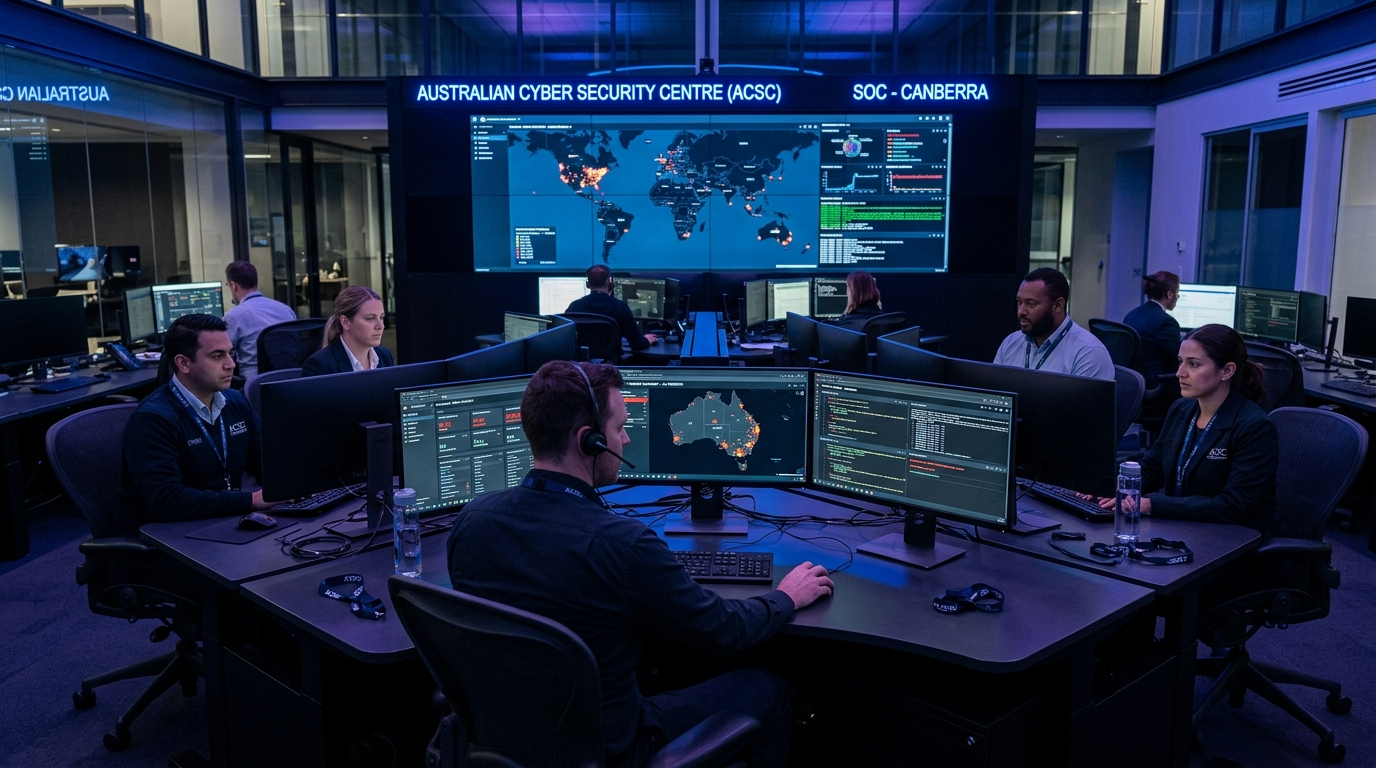
Following high-profile national telecommunications and healthcare data breaches in recent years, cybersecurity has transformed from an isolated operational IT function into a paramount board-level governance priority across Australia. With the Federal Government actively implementing the 2023–2030 Australian Cyber Security Strategy, domestic demand for accredited security analysts, penetration testers, and compliance architects has surged to historic highs.
The Catalyst: Australia’s Stringent Regulatory Landscape
Australian organizations face intensive regulatory pressure to safeguard critical infrastructure and sensitive customer identities. The Security of Critical Infrastructure Act 2018 (SOCI Act) now imposes strict mandatory incident notification obligations (within 12 to 72 hours) and cyber risk management mandates across eleven key economic sectors, including energy, financial services, healthcare, transport, and food logistics.
Furthermore, the Australian Signals Directorate (ASD)—via the Australian Cyber Security Centre (ACSC)—mandates the Essential Eight mitigation strategies. The Essential Eight represents a baseline operational framework designed to prevent malware execution, limit the extent of cyber incidents, and recover data availability. Enterprise competence in demonstrating Essential Eight Maturity Levels (Maturity Levels 1, 2, and 3) is a prerequisite for bidding on federal, state, and corporate contracts.
Under the Privacy Act 1988 and the Notifiable Data Breaches (NDB) scheme administered by the Office of the Australian Information Commissioner (OAIC), entities with an annual turnover exceeding $3 million face penalties of up to $50 million or 30% of turnover for serious or repeated privacy interferences. This unprecedented regulatory enforcement has forced ASX200 companies and multinational corporations operating in Australia to build substantial internal security operations centers (SOCs) and dedicated cyber risk governance teams.
High-Demand Cybersecurity Career Pathways & Remuneration
The Australian cybersecurity talent shortfall spans both offensive (red team) and defensive (blue team) functions, alongside compliance governance and architecture:
| Role Title | Key Focus & Tools | Target Certifications | Average Australian Package (AUD + Super) |
|---|---|---|---|
| SOC Analyst (Level 2 / Senior) | Threat hunting, SIEM (Splunk, Microsoft Sentinel), incident triage | CompTIA Security+, CySA+, BTL1 | $115,000 – $145,000 |
| Penetration Tester / Red Teamer | Web app testing, network exploitation, Cobalt Strike, Burp Suite | OSCP, CRTO, CREST CRT / CCT | $135,000 – $180,000 |
| Security Architect | Zero Trust architecture, cloud IAM, network segmentation, DevSecOps | CISSP, CCSP, AWS Security, SABSA | $170,000 – $225,000 |
| IRAP Assessor / GRC Consultant | Information Security Manual (ISM) auditing, compliance reporting | IRAP Assessor, CISM, CRISC, ISO 27001 LA | $160,000 – $215,000 / $1,200+ day rate |
| Chief Information Security Officer (CISO) | Board reporting, crisis management, enterprise risk posture | CISM, CISSP, MBA / Executive Leadership | $250,000 – $400,000 + Executive Bonus |
The Essential Eight Explained: Operational Implementation
Every Australian cybersecurity practitioner must understand the mechanics of the ASD Essential Eight strategies and their corresponding maturity levels:
- Application Control: Preventing the execution of unapproved/malicious programs (including .exe, .dll, scripts, and installers) on workstations and servers using tools like AppLocker or Windows Defender Application Control (WDAC).
- Patch Applications: Mitigating vulnerabilities in third-party software (such as browsers, PDF readers, and office productivity tools) within 48 hours for extreme-risk flaws.
- Configure Microsoft Office Macro Settings: Blocking unauthorized macros from the internet and ensuring only cryptographically signed macros run in isolated environments.
- User Application Hardening: Disabling unnecessary browser features, Flash, Java, and blocking untrusted web advertisements.
- Restrict Administrative Privileges: Ensuring standard user accounts never hold administrative privileges, auditing privileged credentials, and enforcing Just-In-Time (JIT) access.
- Patch Operating Systems: Upgrading and patching critical OS flaws within strict statutory timeframes, with zero tolerance for unsupported legacy kernels.
- Multi-Factor Authentication (MFA): Enforcing phishing-resistant MFA (such as FIDO2 security keys) across all remote access services, cloud consoles, and privileged user accounts.
- Regular Backups: Maintaining immutable, air-gapped, encrypted backup copies with regular restoration testing drills.
The Value of Australian Government Security Clearances
Nowhere is the demand for cybersecurity capability more acute than in Canberra and defense-adjacent consulting practices. The Australian Government Security Vetting Agency (AGSVA) conducts background investigations for national security clearances:
1. Baseline Clearance
Verifies personal identity, residency, and criminal history over a 5-to-10-year period. Provides access to classified material up to the ‘Protected’ level.
2. Negative Vetting Level 1 (NV1) & Level 2 (NV2)
Involves deep financial audits, psychological assessments, and comprehensive character interviews. Provides access up to ‘Secret’ (NV1) and ‘Top Secret’ (NV2) materials. Holding an active NV1 or NV2 clearance instantly commands a $20,000 to $45,000 salary premium across federal government contracts.
3. Positive Vetting (PV)
The highest level of security vetting in Australia, involving invasive background inquiries, polygraph-style vetting interviews, and complete financial transparency. Professionals holding active PV clearance in Canberra routinely negotiate annual compensation packages exceeding $250,000 or contract rates upward of $1,800 to $2,500 per day.
Consultant Market Intelligence: The IRAP Accreditation Advantage
Becoming an officially endorsed IRAP Assessor (Infosec Registered Assessors Program) through the ACSC represents one of the most lucrative freelance and consulting pathways in Australia. IRAP assessors evaluate commercial cloud providers, SaaS platforms, and enterprise solutions against the Australian Government Information Security Manual (ISM). Experienced assessors operating through boutique consultancies routinely invoice between $1,400 and $2,200 per day.
Offensive Security: The Rise of CREST Certified Penetration Testing
For ethical hackers and penetration testers in Australia, CREST Australia and New Zealand serves as the premier professional validation body. Top financial institutions and federal departments contractually mandate that third-party penetration testing teams hold CREST Practitioner (CPI), Registered (CRT), or Certified (CCT) certifications. Pairing an Offensive Security Certified Professional (OSCP) credential with CREST accreditation provides the golden ticket into top-tier advisory practices.
Navigating Contract vs. Permanent Appointments
Because cybersecurity projects frequently involve intense finite audits (such as preparing an enterprise for ISO/IEC 27001 certification or conducting a post-breach remediation uplift), the Australian cybersecurity contract market is exceptionally vibrant. Senior analysts often alternate between high-yield daily-rate contracts ($900 to $1,500/day through recruitment panels) and stable permanent enterprise posts offering long-term incentive plans.
When operating as an independent contractor, practitioners must hold appropriate commercial insurances, including Professional Indemnity Insurance of at least $10 million and Public Liability Insurance of $20 million, as commonly required by major Australian enterprise vendor panels.
Frequently Asked Questions
Can non-Australian citizens obtain an AGSVA security clearance?
Generally, Australian citizenship is mandatory for AGSVA clearances. However, citizenship waivers may be granted in rare circumstances for specialized technical defense projects where an exceptional skills shortfall exists.
Which certification should I pursue first to break into Australian cybersecurity?
For foundational security operations, start with CompTIA Security+ paired with practical hands-on labs (such as TryHackMe or Hack The Box). For governance and compliance roles, pursue ISO 27001 Lead Implementer or CISA certifications.
What is the impact of AI on cybersecurity roles in Australia?
Rather than eliminating roles, generative AI has created significant demand for security engineers who can secure machine learning pipelines against adversarial prompt injection, model poisoning, and unauthorized training data exfiltration.
